Tampilkan postingan dengan label inequalities. Tampilkan semua postingan

Selasa, 12 Februari 2013

Doing something about inequalities in health

Posted by Jean Adams

I was at a meeting in Edinburgh at the end of last year on inequalities in health. It was one of those events full of eminent (and emeritus) professors where I felt slightly out of my intellectual depth. I didn't trust myself to say much. But I tried to listen well.
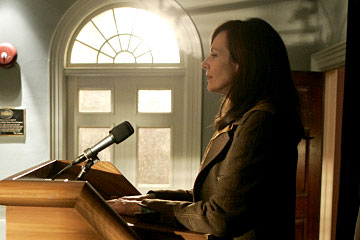
We need to pro-actively engage with the media - like CJ Cregg did everyday
One of the things about health inequalities is that we all sort of know what the solution is. When I told my dad I was going to do a PhD on why poorer people tend to die younger than richer people, he said "well isn't it just because they don't have as much money?". This confused me. What I was interested in was the physiology - how does poverty "get under the skin?". I don't think the money thing had even crossed my mind.

Now, ten years later, I increasingly agree with my dad. Who cares about the physiology? Sure we could know more about the detailed biological processes going on, but what difference would it make to what we might do about inequalities? The solution remains that to change health inequalities to any substantial extent, we have to change the social structure. Reduce income inequalities, redistribute wealth.

You don't need to be a professor to work that out.

The problem seems to be that we (who? the academic community?) think any sort of drastic wealth redistribution is unattainable, or maybe just too difficult to attain. So we think of other little things we might be able to do to alleviate the problem, rather than tackle the cause. You know, target cancer screening programmes better, that sort of thing.

What would it take to get wealth redistribution? Political will. What would it take to get political will? Public pressure. What would it take to get public pressure? Media agitation. Just like everything else.

One of the things that I was slightly surprised we ended up talking about in Edinburgh was engaging with the media. Sure, I like a bit of science communication. But it's not something that has come up in any of my previous conversations about health inequalities. In fact in previous discussions about science communication, the conversation has rather stopped dead whenever I’ve mentioned inequalities.

The phenomenon of inequalities in health is not inherently media friendly. There are no breakthroughs to report on. No big shiny gadgets to take pictures of. Poorer people get sicker more and die younger. As one participant at the Edinburgh meeting pointed out, if there's a report documenting the extent of inequalities it might get a bit of coverage, but it will be presented as if this is some big, new finding. The coverage won’t go much beyond the data to explore what the cause or solution might be. Then there will likely be a few years of editorial 'fatigue' when it feels like that story has been done recently. Once everyone's forgotten, a new report might spark more interest, but again the coverage will be superficial. And the cycle will repeat.

Other participants described instances of reporters looking for a human angle on inequalities stories traipsing off to the most deprived parts of Glasgow and asking the people they met there why their health was so rubbish.

Mainstream media coverage doesn’t have to be like this. But it will be unless those of us within the public health academic and practice communities interested in inequalities in health get a bit more media-savvy. We need to pro-actively generate informed media debate ourselves. One fairly easy approach is to pitch articles to online outlets such as Comment is Free and newspaper blogs that are desperate for informed and timely content on policy issues.

We also need to be ready to publicly comment on anything to do with inequalities even before we are asked. One researcher, very experienced in media work, described how they prepare written commentary on new reports and statements on inequalities issues the day before they are released. It is fairly easy to guess in advance what the content of any new report will be and so respond appropriately – with final tweaks made on the day once they’ve had a chance to read the details. By staying a step ahead of events, it is possible to guide journalists and debate away from simple reporting to more in-depth consideration of what could be done to alleviate the problem.

Which is obviously all rather more easily said than done. We are, after all, full-time researchers, not part-time journalists. But maybe we could hold each others’ hands a bit and take it step by step and see how it goes? It seems we might have much more to gain, than to lose, from trying.

So who wants in with me on a Comment is Free post on what we need to do about health inequalities in the UK today? Ready to be pitched to coincide with the next big report.

Rabu, 18 Juli 2012

From middle-class to world-class

Posted by Peter Tennant

I enjoy watching tennis, use words like 'loo' and 'supper', and open my Christmas presents after lunch. In the UK, this makes me firmly middle-class. But much as I might protest (usually by wittering about my 'deprived' schooling), I know it's the truth. Why else would I feel so at home in academic research, a profession dominated by the middle classes?

Strawberries and cream at Wimbledon
On the plus side, this makes for some delicious bring-and-share lunches, what with all the Marks & Spencer nibbles, and home-made cakes (made, of course, with organic locally-sourced ingredients). But much as I enjoy free-range cupcakes, is it good for research, especially in a subject called 'public' health?

Former British Prime Minister Tony Blair might have once declared that 'we're all middle class now', but the gap between the UK's rich and poor is arguably wider than any time since the Second World War. And where there are income differences, there are also differences in health status and health-behaviour. Which has left me wondering, are a largely middle-class community best placed to understand and empathise with the UK's most deprived, so often the 'public' we are trying to target in 'public health'?

Don't get me wrong - I'm not saying that great work isn't being done by great people. And I'm not saying any researcher is actively biased. Anyone who's ever met a Scientist will agree; we are generally quite objective. After years of being drilled to act like a robot, some of us have even converted to running on petrol and oil, rather than continuing to rely on the inefficiency of food and water.* But even the most robotic researcher will find it harder to accept something, or even think to ask about something, that doesn't fit with their own experiences or world-view.

ERROR! ERROR! DOES NOT COMPUTE

Could this narrow demographic also (partly) explain why researchers find certain groups so hard to recruit? Or, to put it more bluntly, are UK public health researchers sometimes talking a different language? As an unhealthy person working in an Institute with the word ‘health’ in its name, I know how patronising it can feel:

“Post-exercise endorphins you say? I’m afraid all I get is wheezing, cramp, and a sensation of impending death”

I doubt it’s a coincidence that successful commercial organisations like Weight Watchers employ members of the local community, who have previously lost weight and maintained a healthy weight thereafter, to run their meetings. In other words, people who speak the same language. Could you imagine the same meetings being run by an average public health researcher?

1) LOADING WEIGHT LOSS PROGRAMME LESSON 001
2) INSTRUCT AUDIENCE TO “DO 30 MINUTES OF MVPA**”.
3) LESSON END


OK. Slight over-exaggeration. In fact, the best public-health interventions draw on detailed qualitative research (i.e. where brave researchers have ventured outside the ivory tower to speak to real members of the public) to ensure it addresses the needs and barriers of the target population. But I still think a bit more demographic diversity wouldn’t do the profession any harm.


*This sentence may contain factual errors
**MVPA, by the way, is public health research speak for 'Moderate or Vigorous Physical Activity'

Rabu, 27 Juni 2012

Can banking help fight health inequalities?

Guest post by Cam Donaldson

In 2010, Glasgow Caledonian University established the Yunus Centre for Social Business and Health. Muhammad Yunus is the 2006 Nobel Peace Laureate, awarded jointly with Grameen Bank for their efforts to relieve poverty, largely through promulgating microcredit. Grameen - 97% owned by its borrowers - issues small collateral-free loans, often for enterprise, to millions of the poorest people in Bangladesh and in several other countries.

Yunus does not fund our Centre. Why, then, is a UK University working with him, and what has microcredit got to do with health? Let me try to explain by bringing together three strands of thought.

Cam, with Muhammad Yunus and GCU Principal Pamela Gillies
First, on health, a more explicit strategy of inclusion combined with fair loan provision - essentially what Grameen promote - could facilitate health improvement. Gaps in life expectancy between the richest and poorest areas of Glasgow have grown to 28 years. We already have a world class NHS, so solutions do not lie there. Even public health policy seems more like “products chasing diseases”. We identify ‘risk factors’ and then target products (mainly drugs) at them. Either that or we tell people to exercise more, eat less fatty foods, give up smoking and drink less. But, can health be ‘compartmentalised’ like this? Further away from diseases and risk factors are the root causes - it is low income, societal exclusion and hopelessness that kill people. Without working on the ‘causes of the causes’ more-conventional attempts at public health improvement will have limited impact.

Second, on banking, the sector has been bolstered by national bailouts and quantitative easing. The bonus culture continues. Banks pander to middle class ‘trendies’ with more flexible opening hours (a 1980s phenomenon on which they had cut back!) and the entry of flash providers like Metro and Virgin. As we argue whether regulation goes far enough, the poorest are largely ignored – many trapped on benefits, which, despite being squeezed, people still cannot get off because, whilst raking in billions from QE, banks will not go near such people or their business ideas.

Government matches this lack of support, not allowing the welfare system to become a facilitator. They could do this by permitting schemes allowing income from welfare to taper off gradually whilst that from private sources grows - providing a minimum income overall and a guarantee of a return to welfare if such businesses fail. No less a guarantee than the banks have had, and one with much less risk – if a business is a success, one more person is off welfare and likely creating jobs for others. If it fails, then, at worst, we are merely back where we started, although it is thought that having tried and failed still enhances future job prospects. Money is placed more directly in the hands of those more likely to spend, contributing in a small way to getting the economy moving.

Third, on the ‘Big Society’, implementing some of the above would mean society could truly claim to be big, ensuring enhancement of well-being amongst the worst off. So far, many examples of the Big Society merely show it being captured by the middle class to their own advantage – with many more schemes in affluent as opposed to more-deprived areas, despite notable exceptions.

So here it is. To create a truly Big Society, and enhance the health and well-being of the poor, there is a role for banking. Examples are now spreading to the West – Fair Finance in London, started up by the son of Bangladeshi immigrants, is an excellent case. But we need more and they need more strategic support. Hence, the attempt to bring Yunus’ ideas to the most deprived areas of Scotland and the creation of our research centre to assess its impact. 

If it can be done in Bangladesh, why not here?